
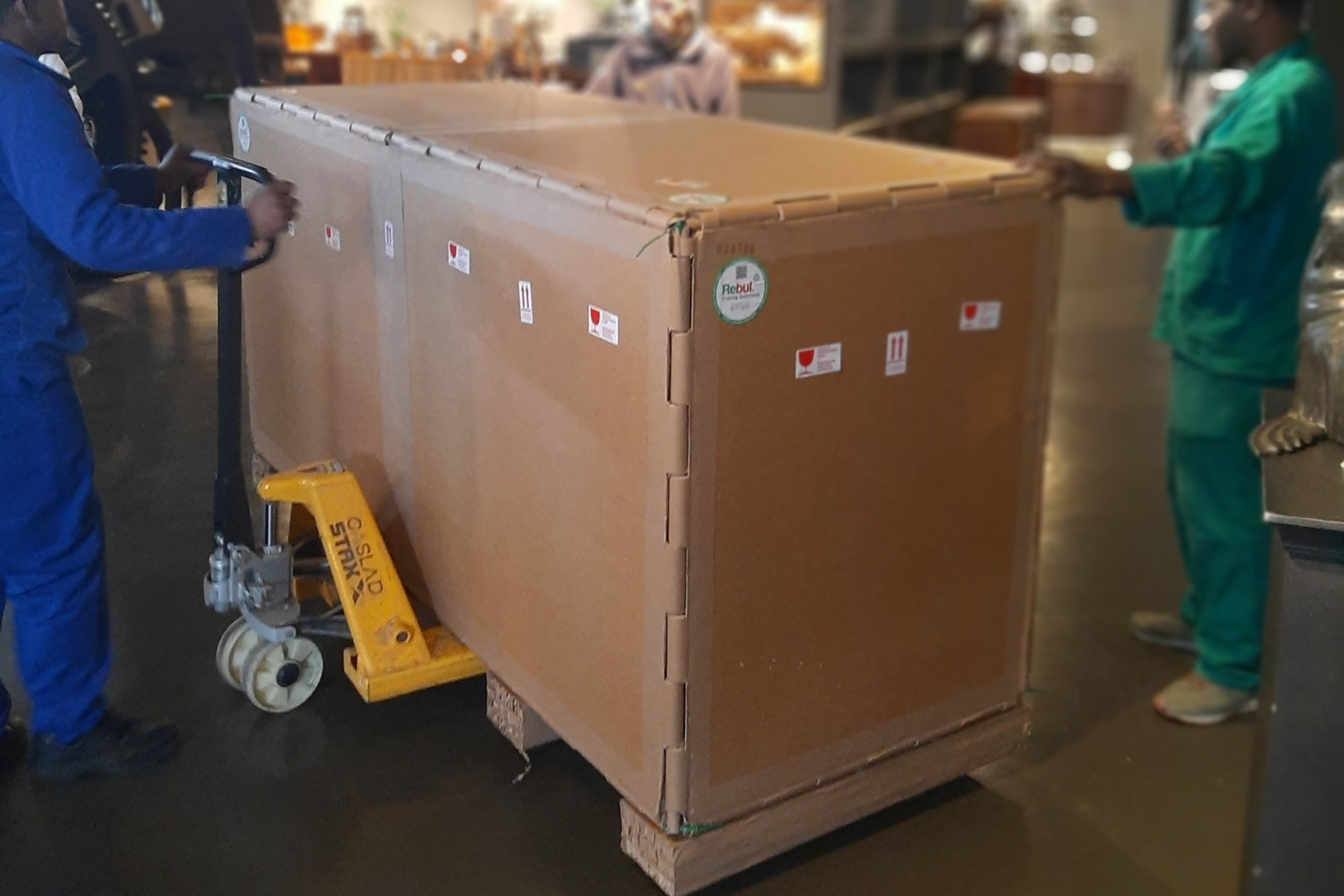
Industrial Packaging Design Guide
How Custom Industrial Packaging Is Designed for Machinery and Manufactured Products
Effective industrial packaging begins with the product itself. Its dimensions, weight, vulnerable components, handling requirements and transport route all influence how the final packaging solution should be designed.

Packaging is built around the product
Not every machine or manufactured item can be protected using a standard box.
Quick Answer
What is custom industrial packaging?
Custom industrial packaging is engineered around a product’s dimensions, weight, fragility, handling method and transport conditions. Every component is developed to provide support, control movement and reduce damage throughout storage, loading, transport and final delivery.
Product-Specific Packaging
Why standard packaging does not work for every industrial product
Machinery, electrical components and manufactured products differ in size, weight, construction and sensitivity. Standard packaging may leave some products unsupported while using unnecessary material around others.
Custom packaging removes this compromise by matching the structure, protection and handling features to the actual product.
Dimensions
Made-to-size packaging reduces unnecessary movement and unused space.
Product Weight
Heavy products require correctly positioned load-bearing support.
Centre of Gravity
Weight distribution affects stability, lifting and base design.
Fragile Components
Controls, fittings and surfaces may need additional clearance and protection.
Handling Method
Forklift, crane and pallet-jack access should be planned in advance.
Transport Route
Local delivery and international export create different packaging risks.
01 →
Understand Product
02 →
Review Journey
03 →
Assess Risks
04 →
Design Protection
05 →
Plan Handling
06 →
Manufacture
The Design Process
How custom industrial packaging is developed
Every stage contributes to a packaging solution that protects the product, supports safe handling and performs throughout the complete journey.
01. Understanding the product
The design process begins by reviewing the physical characteristics of the product and identifying areas that require support or protection.
- Product dimensions
- Total weight
- Centre of gravity
- Photographs
02. Understanding the complete journey
Packaging must be designed for every handling and transport stage, not only the final destination.
- Factory movement
- Warehouse storage
- Road freight
- Forklift loading
03. Selecting suitable packaging materials
Materials are chosen according to the product weight, transport route, environmental exposure and level of protection required.
- Honeycomb board
- Timber bases
- Reinforced board
- Foam inserts
04. Manufacturing the packaging
Once the design is approved, the packaging is manufactured according to the required dimensions, structure and protection specifications.
- Dimensional accuracy
- Material quality
- Structural strength
- Assembly consistency

Risk Assessment
Good packaging design starts by identifying what could go wrong
A product may appear stable while stationary but experience movement, impact and compression once it enters the supply chain.
Identifying these risks early allows support, restraint and protection to be built into the packaging before transport begins.
Road vibration
Sudden braking
Forklift impact
Incorrect lifting
Stacking pressure
Moisture exposure
Repeated transfers
Product movement
Material Selection
Choosing materials according to the application
Custom packaging may use one material or a combination of materials depending on the product and the level of protection required.
01. Honeycomb Packaging
Lightweight paper-based structures can provide effective protection for many manufactured products and machinery components.
- Reduced packaging weight
- Custom panel construction
- Recyclable material options
- Easy manual handling
- Suitable for made-to-size designs
02. Timber and Reinforced Bases
Structural bases may be needed for heavy products, concentrated loads or machinery requiring strong lifting support.
- Heavy-load support
- Reinforced lifting points
- Structural framing
- Suitable for selected machinery
- Can be combined with honeycomb
03. Foam and Protective Components
Cushioning, wraps and protective inserts can be used around sensitive surfaces and vulnerable components.
- Surface protection
- Impact cushioning
- Corner protection
- Component separation
- Controlled clearance
Inside the Packaging
Internal protection is just as important as the outer structure
A strong outer package cannot prevent damage when the product is able to shift or vibrate inside.
01
Support Blocks
Carry product weight at suitable load-bearing areas.
02
Internal Restraints
Reduce forward, backward and sideways movement.
03
Corner Protection
Protect vulnerable edges and surface finishes.
04
Cushioning
Absorbs vibration and reduces impact around sensitive areas.
05
Dividers
Prevent multiple components from contacting each other.
06
Bracing
Improves stability and supports taller or irregular products.
Handling and Installation
Packaging should protect the product and support the people handling it
Safe Handling
Designed for loading and movement
Handling access should be incorporated into the packaging structure rather than added as an afterthought.
- Forklift entry points
- Crane lifting access
- Balanced weight distribution
- Stable pallet or base design
- Stacking limitations
- Clear handling labels
Easy Unpacking
Designed for safe product removal
The packaging should allow the customer to access and remove the product safely without damaging sensitive components.
- Clear opening sequence
- Removable panels
- Accessible restraints
- Reduced unpacking labour
- Safe machinery removal
- Better installation preparation
Project Information
What Rebul needs before designing your packaging
Complete product and transport information helps reduce assumptions and allows the packaging solution to be developed more accurately.
Product dimensions
Packaging Performance
How custom packaging reduces damage and total logistics costs
The value of custom packaging is measured across the complete delivery process, not only by the initial packaging price.
Reduced Product Damage
Packaging designed around the product provides better support and reduces movement throughout transport.
- Less vibration and impact
- Improved load stability
- Better surface protection
- Reduced handling errors
- Fewer transport claims
- More reliable final delivery
Lower Overall Costs
Well-designed packaging can reduce hidden costs created by inefficient materials, damage and difficult handling.
- Reduced replacement costs
- Lower packaging waste
- Improved packing efficiency
- Reduced unnecessary weight
- Fewer customer complaints
- Less production disruption
Why Rebul
Why manufacturers choose Rebul
Rebul designs packaging around the product, its handling process and the conditions it will face during transport.
Product-Specific Design
Packaging developed according to dimensions, weight and risk.
Honeycomb Expertise
Lightweight engineered solutions for suitable applications.
Machinery Packaging
Custom support for equipment and manufactured products.
Export Ready
Packaging designed for local and international transport.
Handling Considered
Forklift, crane and unpacking requirements included.
Sustainable Options
Reduced timber use and recyclable materials where appropriate.
Cape Town Manufacturing
Local production and packaging support in the Western Cape.
Johannesburg Support
Industrial packaging support for customers in Gauteng.
Let's Design the Right Packaging for Your Product
Share your product dimensions, weight, photographs, destination and handling requirements. Rebul will recommend a custom industrial packaging solution designed for your machinery or manufactured product.
FAQs
Custom Industrial Packaging Design FAQs
What is custom industrial packaging?
Custom industrial packaging is designed specifically around a product’s dimensions, weight, handling requirements and transport conditions.
Why is custom packaging better than standard packaging?
Custom packaging provides better product support, reduces movement and protects vulnerable components throughout handling and transport.
What information is needed to design industrial packaging?
Product dimensions, weight, photographs, engineering drawings, destination, transport method, handling requirements and quantity are normally required.
What materials are used in custom industrial packaging?
Depending on the application, materials may include honeycomb board, reinforced paperboard, timber bases, foam, corner protection, protective wrapping and internal restraints.
Can custom packaging reduce transport damage?
Yes. Product-specific packaging reduces movement, provides suitable support and protects vulnerable areas throughout the supply chain.
Is custom industrial packaging suitable for export?
Yes. Custom packaging can be designed for container loading, international handling, moisture exposure and longer export transport routes.
Can packaging be designed for forklift and crane handling?
Yes. Forklift entry points, crane access, lifting positions and load distribution can be incorporated into the packaging design.
Related Resources
Continue exploring industrial packaging
Industrial Packaging Solutions
How Much Does Industrial Packaging Cost?
Industrial Packaging Mistakes That Cause Product Damage
Custom Packaging for Industrial Machinery
