

Material Comparison Guide
Honeycomb Boards vs Cardboard: What’s the Difference?
They may look similar on the surface, but they are designed for very different jobs.
Both are paper-based materials, but when weight, structural strength, load-bearing performance, rigidity, and material efficiency matter, the difference becomes much clearer.
Quick answer
Cardboard is typically designed to contain. Honeycomb boards are often designed to support.
→ Cardboard: boxes, cartons and retail packaging
→ Honeycomb boards: panels, pallets, crates and displays
→ Both are paper-based, but not used the same way
Standard Cardboard
What Is Cardboard?
Cardboard is a broad term commonly used to describe paper-based packaging materials designed for protection, storage, and shipping.
The most common type used in packaging is corrugated cardboard, which consists of an inner fluted paper layer and outer flat liner boards.
→ Shipping boxes
→ Retail packaging
→ Consumer product packaging
→ Protective inserts
→ Lightweight disposable packaging
Engineered Honeycomb
What Are Honeycomb Boards?
Honeycomb boards are engineered paper-based panels designed to provide lightweight structural strength.
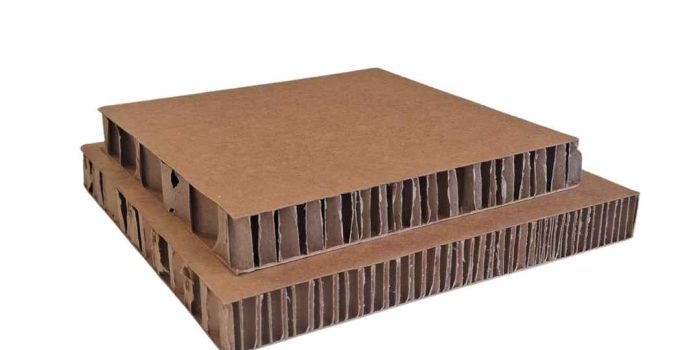
Instead of a standard corrugated fluted layer, honeycomb boards use a honeycomb-shaped core structure sandwiched between outer liners.
✓ Protective packaging
✓ Honeycomb pallets
✓ Structural crates
✓ Furniture boards
✓ Retail displays and panels
Common Misconception
Is Honeycomb Board Just Cardboard?
Because honeycomb boards are made using paper-based materials, many people assume they are simply another form of cardboard.
That is not entirely accurate. While honeycomb boards are paper-based, the internal engineering changes how the material performs.
The biggest difference is this: cardboard is typically designed to contain. Honeycomb boards are often designed to support.
Side-by-Side Comparison
Honeycomb Boards vs Cardboard: Key Differences
| Feature | Cardboard | Honeycomb Boards |
|---|---|---|
| Core Structure | Corrugated fluted layer | Honeycomb cell core |
| Primary Use | Packaging and boxes | Structural and engineered applications |
| Strength | Good for general packaging | Higher strength-to-weight performance |
| Rigidity | Flexible depending on grade | Stronger panel rigidity |
| Load Distribution | Limited | Better distributed structural support |
| Applications | Pallets, crates, displays, furniture and panels | Pallets, crates, displays, furniture and panels |
| Structural Use | Limited | Designed for structural applications |
Use Cardboard When
When Cardboard Works Well
Cardboard remains one of the most practical materials for many everyday packaging applications.
→ Lightweight shipping boxes are needed
→ Retail packaging is required
→ Disposable packaging is preferred
→ Consumer goods need lightweight protection
→ Budget packaging is the priority
Use Honeycomb Boards When
When Honeycomb Boards Make More Sense
Honeycomb boards become more practical when standard cardboard does not provide enough structural performance.
✓ Structural packaging is required
✓ Lightweight strength matters
✓ Larger panel surfaces are needed
✓ Load-bearing support is important
✓ Furniture or display panels are needed
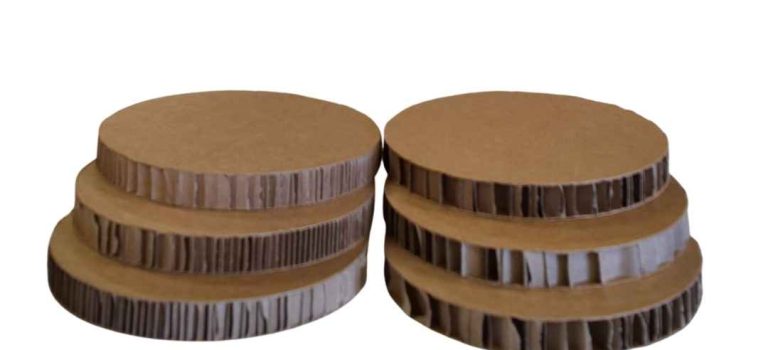
Lightweight Performance
Strength Without Excess Weight
A common assumption in material selection is that heavier materials must be stronger. That is not always true.
In many packaging and panel applications, excess weight can increase transport costs, handling strain, loading inefficiency, installation difficulty, and material usage.
Honeycomb boards are designed to address this challenge by improving structural performance without unnecessary bulk.
Applications
Where Honeycomb Boards Are Used
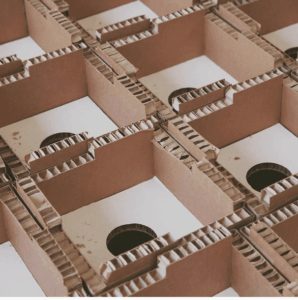
Protective Packaging
Honeycomb boards are used in custom crates, structural inserts, protective packaging, and export-ready packaging systems.

Furniture and Panels
Used for shelving, cabinetry, interior panels, display furniture, and lightweight engineered surfaces.
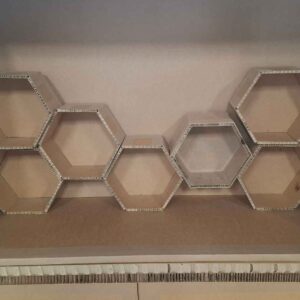
Retail Displays
Suitable for exhibition systems, point-of-sale displays, portable structures, and display panels.
Sustainability
Sustainability Considerations
Both cardboard and honeycomb boards are paper-based materials, which gives them sustainability advantages compared to some heavier alternatives.
Honeycomb boards also introduce material efficiency through engineering. The honeycomb core structure can provide performance while using less solid material than a heavy solid-core equivalent in certain applications.
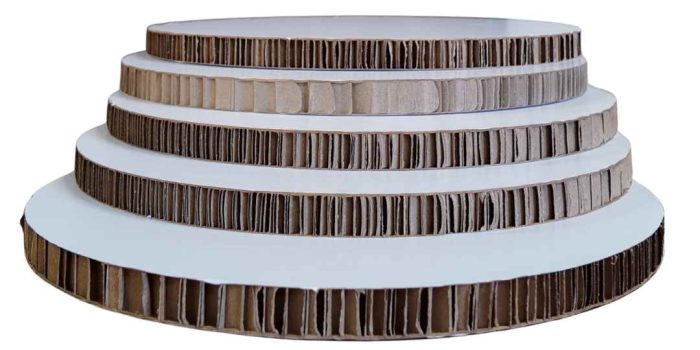
Choose Cardboard
When the Job Is Simple Packaging
Choose cardboard when general packaging is needed, lightweight cartons are sufficient, disposable packaging is acceptable, structural support is not required, and budget packaging is the priority.
Choose Honeycomb Boards
When the Job Needs Structure
Choose honeycomb boards when structural performance, lightweight strength, panel rigidity, load-bearing support, packaging efficiency, or engineered board applications are required.
Where Rebul Fits In
Honeycomb Board Solutions for More Than Standard Packaging
Rebul supplies honeycomb board solutions for businesses that need more than standard paper-based packaging materials.
Our honeycomb solutions are used in pallets, protective packaging, structural crates, custom packaging systems, furniture board applications, retail display structures, and lightweight engineered panel systems.
FAQs
Frequently Asked Questions
Is honeycomb board stronger than cardboard?
Honeycomb boards are generally designed to provide improved structural strength and rigidity compared to standard corrugated cardboard in many applications.
Is honeycomb board made from cardboard?
Honeycomb boards are made from paper-based materials, but they are engineered differently from standard cardboard and designed for different applications.
What is honeycomb board used for?
Honeycomb boards are used in packaging, pallets, crates, displays, furniture systems, interior panels, and lightweight engineered structural applications.
Can honeycomb boards replace cardboard?
Not always. Cardboard works well for many packaging applications. Honeycomb boards are better suited where structural performance, panel rigidity, or lightweight strength are needed.
Are honeycomb boards environmentally friendly?
Honeycomb boards are paper-based and recyclable, and their lightweight engineered structure can help improve material efficiency in certain applications.
What is the difference between honeycomb board and corrugated cardboard?
Corrugated cardboard is generally used for packaging boxes and protective cartons, while honeycomb boards are engineered for structural applications that require improved strength-to-weight performance.
Looking for a Lightweight Timber Alternative?
Honeycomb boards provide a practical alternative to traditional wood and timber boards for businesses focused on lightweight performance, sustainability, and material efficiency.
Related Resources
Continue Exploring Packaging Solutions
Custom Packaging Solutions South Africa
Made-to-size packaging built around your product, route and handling needs.
Furniture Packaging
Protective packaging for furniture manufacturers, retailers and exporters.
Freight Crates For Export Shipping
Strong crate solutions for fragile, large or high-value products.
Furniture Export Shipping Guide
How furniture manufacturers protect products during export shipping.
