

Artist Interview
10 Questions with Nicola Roos
A conversation on African historical figures, sculptural materials, recycled rubber, creative process, and the importance of protecting large-scale artworks during movement and transport.
Artist Feature
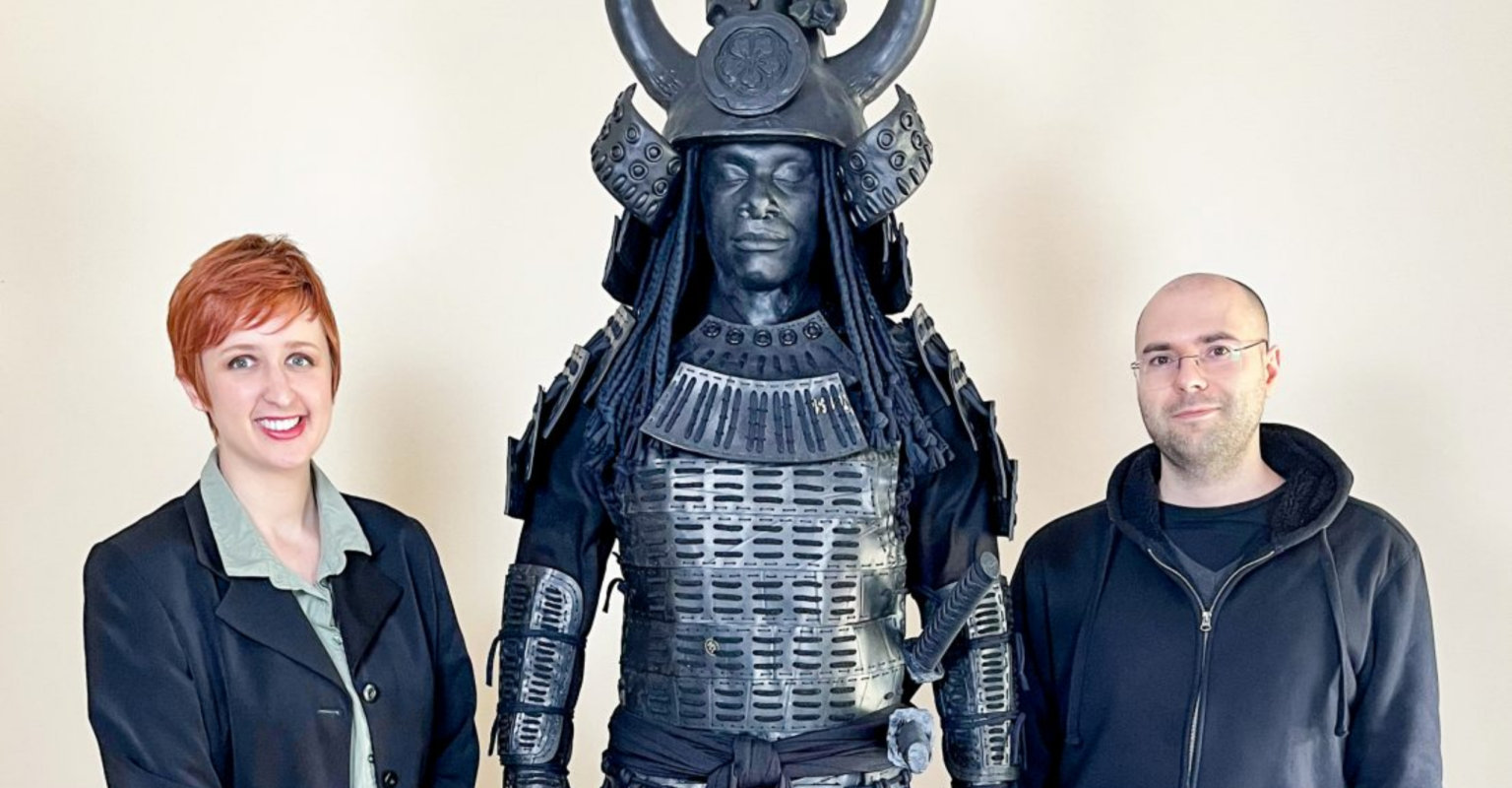
About The Interview
Art, Material, Culture and Movement
This feature explores Nicola Roos’ artistic process, her use of recycled materials, and the physical demands involved in producing, handling, transporting, and preserving large sculptural work.
Because this article is already ranking well, the content should remain mostly unchanged. The redesign should focus on improving readability, visual flow, reader retention, and conversion opportunities around art packaging and protective crating.
Large artworks need more than careful creation. They need careful movement, considered handling, and protection at every stage.
The Interview
10 Questions with Nicola Roos
01
Why the focus on African historical figures?
It began in my 4th year at university when the “Rhodes Must Fall” protests were taking place all over UCT, it was very much changing the narrative to focus on the decolonisation of African knowledge bases and returning the focus in academia – and wider circles – to Africa, and the value of Africa in the world history.
It was then when I started looking at figures from the early colonial period. Because of this call for decolonisation and looking back on our colonial history, I started looking at figures from the early colonial period that had played a role in the way in which the post-colonial people see themselves and I was looking at sort of a common ancestor – something that could be celebrated instead of torn down.
Especially because of how everything and the whole “Rhodes Must Fall” movement was so destructive. I was looking at something that could unify us and still capture the spirit of what these student activists were trying to say with the movement. There was a lot of racial tension on campus and that’s something that comes up a lot in any conversation involving me and my art because people look at me and they go, “but, you have white skin… why are you doing African history?” and I was looking at a figure that could unite us as a nation, saying the cross-cultural exchange wasn’t all bad, as it set the tone for how we should be perceiving ourselves in terms of our cultural belonging these days. Traditions and cultural practices aren’t always permanently “lost” in the face of cultures colliding – sometimes, what is created amongst such destruction, is just as worthy of being preserved and protected. Everything is always evolving and we should not fight the tides.
02
Why was using rubber so appealing to you?
I think it started with the very bad drought in 2015/2016. Everybody was looking at more sustainable ways of doing life in general, so I was looking at more sustainable art media in light of that. Recycling and upcycling became a new way of life.
It also has a very interesting colonial connotation,because of how rubber was farmed so mercilessly in countries such as the Congo under Belgian occupation during the 1900s. It became a symbol of colonial cruelty in Africa, so for me, it was repurposing this material and using it in a celebratory way to highlight a more unifying figure in African history while still acknowledging the nightmare of our shared past and the part we all played in it.
I feel like it made sense for me to look at that and use something that was previously seen in a very negative light and has a very dark connotation in history. Motor vehicle tubes are also becoming increasingly obsolete, which is another thing I find very interesting. The majority of modern vehicles are switching over to tubeless tyres… so it’s all similar to all these stories, like Yasuke’s, that have faded out of the mainstream record.

Material Work, Detail and Process
Nicola’s work is highly physical and detail-driven. Each piece requires time, patience, and a strong understanding of how materials behave during shaping, joining, and finishing.
From surface preparation to structural balance, sculptural work often involves multiple stages before a piece is considered complete. Material selection, texture, durability, and form all influence the final outcome and how the artwork is experienced in a physical space.
This level of detail and craftsmanship reinforces why custom protective packaging is often necessary for valuable artworks that cannot rely on generic transport solutions.
03
How have you learned regarding using recycled material and upcycling them?
It’s challenging in the sense that it’s incredibly time-consuming, there is a lot of labour involved in getting it to the point where the material is actually usable. And it’s difficult to get the shapes you want because the tyre tubes we use are, naturally, round – and we generally want flatter material to cover larger surface areas. We often need to cut a lot of the excess off and then use that for smaller, decorative bits.
It is also just so dirty when we fish it out of the dump, which is where we source it, here in Durbanville. You must scrub it and sterilize it with alcohol a few times, because it doesn’t easily lose its pungent scent.
04
How did you realise what will make the shipping or transport process easier?
Well, when I started I had them in deconstructed parts mostly just for me to transport my work from my studio to campus for critiques and assessment, so I had a really small car (as one does when you are a student) and I had to make these figure fit. Then I stared deconstructing them so that they could stack and I would be able to transport them in the back of my little Ford. I thought from that perspective that it would be easier for shipping purposes as well, but as we made more and shipped more frequently, we realized that it is easier to have them already constructed when we packed and shipped these works. We have digital installation guides for the person receiving the piece, but we realized that this still meant a cumbersome process for the client or installer to go through. We shifted our focus more to the end-user – we wanted the client not to still have to build the sculpture when they open the crate. This is less time consuming and more rewarding. Then we realized we needed to look at the weight of the sculptures and as time passed, we found more innovative sustainable ways to build the figures and made them a lot lighter so they are easier to ship, easier to move around and it doesn’t lose that “wow factor.”
Rebul Insight: Art transport requires packaging that protects the work from movement, pressure, handling, and surface damage.
Artwork Needs Protection Beyond the Studio
Large-scale artworks often move through multiple environments before reaching their final destination — from studio spaces to galleries, storage facilities, transport vehicles, and exhibition venues.
This is where careful handling and protective packaging become essential. The packaging must support the artwork’s shape, surface, weight, and movement requirements.

05
What inspires you?
To be honest, I think at this point it has a lot to do with trying to improve our product every time, so with each work we have completed we go, “okay, what should we do better next time?” because I feel like one of the biggest dangers for a practicing artist is to stagnate and a lot of people who produce very similar work consistently throughout their careers, they kind of plateau… and as somebody who has explored multiple iterations of the same character, I’ve done a fair amount of stagnation myself, and I don’t want to fall in that trap again. So it’s about keeping ourselves challenged to perpetually be honing our craft. I think on the other hand, there’s just so much history that I would still like to explore – not limited to Yasuke. I’ve been enjoying my “No Man’s Land” project and I feel like it is my signature work at this point: it is what most people would associate with me and my practice, so in that sense I will probably keep exploring this narrative. It has become such an integral part of my identity as an artist. I did a series of female figures for my final year in university, and I would very much like to go back to those stories and look at more obscure and influential feminine characters from history as well.
06
You seem to focus on being very eco-friendly. Is this one of the reasons for using recycled crates?
Definitely! It would defeat the purpose of focusing on sustainability in my own practice if I didn’t follow through on that in all aspects of my work – including packaging.
Creative work may begin in the studio, but preservation depends on how carefully it is handled, packed, and moved.
07
What other reasons do you have for preferring our crates?
Well, the crates are so lightweight. We started in the worst possible way: we had cement bases for our figures, is an incredibly heavy medium, and the sculptures’ bodies were made out of Plaster of Paris, which is also very dense and doesn’t have great archival qualities. We have progressed from that to what we have now; a lightweight and durable product should be shipped in an equally lightweight and durable crate, such as only Rebul can provide!
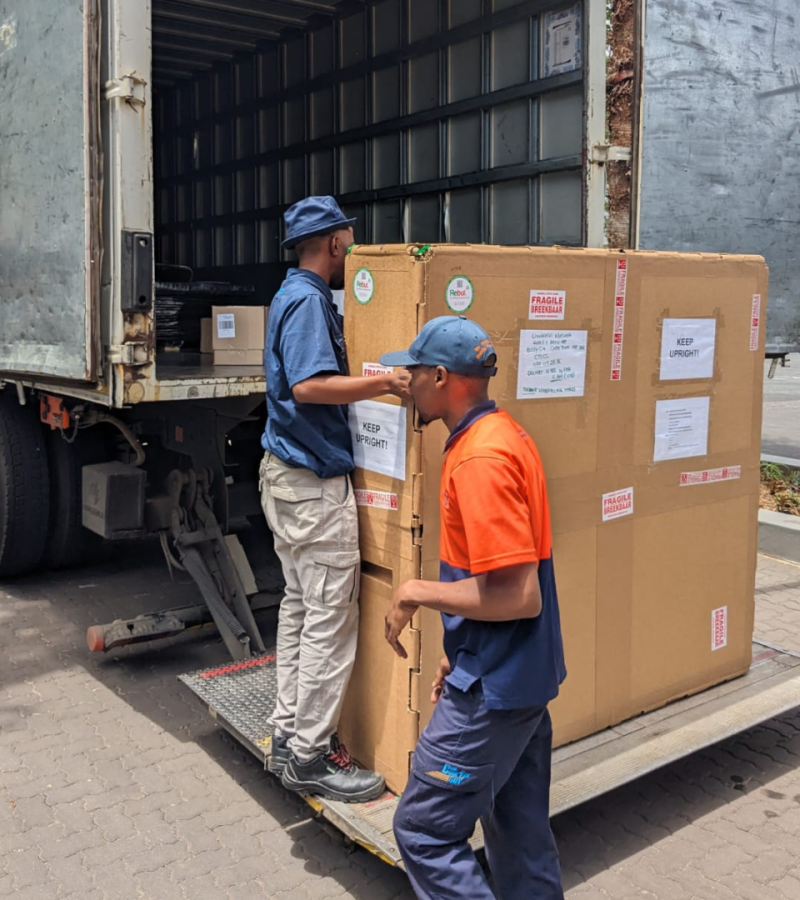
From Creative Work to Protected Movement
Once an artwork leaves the studio, the focus shifts from creation to protection. Fragile surfaces, unusual shapes, and valuable materials need packaging that is designed around the artwork itself.
Large-scale artworks often move through multiple environments before reaching their final destination — from studios and galleries to storage facilities, transport vehicles, exhibitions, and private collections. Each stage introduces different handling conditions and movement risks that need to be considered carefully.
The goal is not simply to move the artwork, but to preserve the condition, craftsmanship, and integrity of the piece from one environment to the next.
08
Where can people find your work?
On my website and now at the SculptX 2022 sculpture fair at The Melrose Gallery in Johannesburg, which runs until the 16th of October. I have my latest work available for viewing in my studio and welcome studio visits any time. Other than that, I try to be active on various social media platforms, such as Instagram, Facebook and my TikTok account has recently begun to gain some traction since I’ve really started to put the time into content creation. My colleague and I also have some big plans for our YouTube channel, so keep an eye on that, for sure. We are also very much open to commissions.
09
Is it difficult working with rubber?
I think there are a lot of elements to it, you must be very knowledgeable on a huge variety of different art-making and sculpture-making processes like molding, casting, and costume design – which is not something that would necessarily be covered in your course work at college or university. Many of the skills we currently have, are those that we have acquired through experience and a lot of trial and error over the last few years. You can never stop learning.
10
Last question, what is next for Nicola Roos?
I would very much like to get into the European market ‘cause I feel like contemporary and innovative African art is very underrepresented in a lot of European countries. In my experience there isn’t a lot of cutting-edge, figurative African sculpture – not like this – available on the European market, so ideally, there is huge room for growth for me. I am doing a virtual art fair in Hamburg, which started recently because of all the COVID lockdowns and restrictions on in-person events and gatherings – and it is a mission to freight art across continents – so they started this concept where they project images of artwork on large-scale screens instead of having the physical pieces on display. This is the happening now at the end of October, so hopefully will be opening a lot of European doors. Asia also remains one of the largest untapped markets for me, which I am excited to explore. I’d like to collaborate with as many people as possible who cross paths with me to expand and establish my brand in various different areas, in private and public collections, both in SA and abroad. The art business is continually evolving and we are staying on top of these new tenets as much as we can. We live in very exciting times, for sure.
For artists, collectors, galleries, and logistics teams, the movement of artwork is part of the preservation process. The right packaging helps ensure the work arrives with the same care with which it was created.
Need Protective Packaging for Valuable Artwork?
Rebul designs custom packaging and crating solutions for fragile, valuable, and high-consideration items that need careful protection during handling, storage, and transport.
Related Resources
Continue Exploring Packaging Solutions
Custom Packaging Solutions South Africa
Made-to-size packaging built around your product, route and handling needs.
Furniture Packaging
Protective packaging for furniture manufacturers, retailers and exporters.
Freight Crates For Export Shipping
Strong crate solutions for fragile, large or high-value products.
Furniture Export Shipping Guide
How furniture manufacturers protect products during export shipping.
